
In last month’s blog we looked at what happens to the ink room knowledge when the experts move on. We talked about what a proper onboarding process should look like to reliably transfer years of experience to the new generation of press operators. We should however, take a step back and ask ourselves – what happens when we cannot find new talent to transfer this knowledge onto?
Recent studies repeatedly show the severity of print and packaging’s skills shortage across most global regions. In the USA, the graphic arts trade association PRINTING United Alliance found that 75% of U.S. printing companies report having difficulties hiring qualified personnel, while in Germany, a Heidelberg / FAZ survey indicated that staff shortages represent the single operational challenge for SME print shops.
If these recruitment challenges persist, print businesses risk losing valuable experience and technical knowledge, while struggling to maintain production capacity and meet delivery deadlines.
So, to stay ahead of the curve, in this month’s InkConnection blog we will:
- Dive further into the consequences of the inability to find new talent.
- Discuss where print is losing talent.
- Give tips on how to inspire the new generation for a career in print.
For this edition, GSE went to hear from students and local educational incentives on how to better attract the next generation of ink room operators.
Why you cannot afford to ignore this change.
Struggling to attract new employees can rapidly lead to a vicious circle, where understaffing, underperformance and low morale reinforce each other. According to a survey cited by HR Drive, a human-resources business publication, roughly 80% of Gen Z employees decide whether they will stay within 60 days.
When new recruits leave early, the time invested in onboarding is lost and vacancies remain unfilled. The resulting staff shortages can cause downtime and put extra pressure on existing employees, increasing the risk of further turnover.
Over time, this cycle can undermine production capacity, extend lead times and damage customer satisfaction. It can also make it harder for businesses to expand, as they struggle to recruit and retain the skilled people they need.
Where is print losing potential talent?
When you ask a technical student for their impression of an ink room, they might picture manual mixing stations in a grimy, cluttered environment, with ink-stained machinery, containers crowding the workspace, slippery floors and a lingering odour of solvents.
Compare that with the immaculate cleanrooms, and precision robotics of almost futuristic high-tech manufacturing, as seen in countless online videos. It’s not hard to see which environment might be more attractive to tomorrow’s engineers and technicians.
What they fail to see is a print industry filled with various technological advances in terms of automation and innovation. In the modern ink room, you do not spend half your shift cleaning buckets, or going back and forth measuring colour accuracy with a reference book. Instead, we are looking at modern solutions such as GSE’s automatic bucket washers and colour correction software.
Education is forgetting about print
In the past, there used to be specialized schools for printing, such as the London School of Printing and Graphic Arts (now known as the UAL London College of Communication). These schools made active efforts to prepare students for a position in the print industry. Nowadays however, as the scope of these institutions becomes more generalized, instead centering around subjects like graphic design, animation and media.
These schools have pivoted away from print as the demand has declined. This leads to scenarios where new hires are not equipped with the right knowledge to efficiently integrate into the ink room.
The disappearance of college-based machine training is a major contributor to a lower awareness among students of print as a viable and interesting career choice.
Where GSE connects with young talent
Acquiring new talent is always an ongoing conversation. To connect with future employees, GSE attends various events and contributes ideas to bridge the gap between students and the shop floor. We recommend anyone invested in finding new talent to do the same.
Career fairs – Establishing contact with local universities and attending their career fairs is a great way to get in direct contact with the next wave of talent. This month GSE attended the HAN ACE Mobility Automotive & Engineering Career Fair, where we demonstrated our technology and talked directly with students looking for internships in the engineering field.
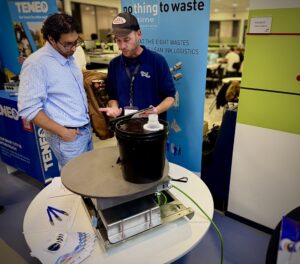
Educational incentives – Looking out for incentives at local schools and colleges is a great way to introduce students to our industry early. Our conversations with university students suggest that many are more focused on the skills they want to develop and apply than on committing to a particular industry.
GSE recently joined the Tech-Tok incentive, a collaborative educational project in the Netherlands that aims at inspiring children aged 10 to 14 to discover technology and the world of engineering. Its lesson kits help children develop technical skills like programming in a fun, accessible way. Additionally, Tech-Tok came up with the idea of a role-model database where young students can discover professionals who come from the same background or school as each other.
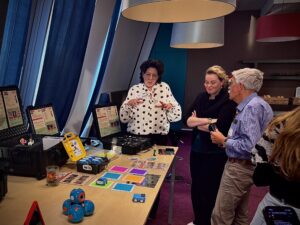
Showcase new technologies – Investing in and showcasing new technologies are what is needed to excite today’s tech-heavy generation. GSE recently joined a local humanoid learning circle, investing in two humanoid robots together with other businesses.
Robots can take on routine, repetitive and time-consuming tasks, freeing employees to focus on work that requires greater skill and judgement. Showcasing these technologies can help make our industry more attractive to new recruits, while demonstrating its commitment to giving employees more opportunities to develop their skills and add value.
How do you excite the new generation?
Identifying what our customers need comes as second nature to us. So why should the same not apply to the people we hire? Growing up with social media and whatever information they want at their fingertips, Gen Z have different priorities from previous generations.
For this generation, a job has become more than a place to earn an income. They strive to build something worthwhile; whether it is good relations with coworkers, a healthy work-life balance or the feeling of contributing to something that makes a noticeable, positive impact in the world we live in.
It is important to consider that most young people grow up with technology everywhere. And those looking to enter the manufacturing industry are likely to see the different types of technology developing and thinking to themselves “Wow, I want to build on this!” and this is where companies in niche industries like print have the opportunity to reach a wide audience of potential new hires.
One of the most interesting aspects of the printing industry is how clearly you can see the impact on the day-to-day. Many people do not realize this, but print is everywhere. Take a stroll through your local grocery store and the impact of print is literally everywhere – we are so to it, that we barely even notice.
Thank you for reading this month’s InkConnection blog! Make sure to give our previous blog a read if you are curious about how to retain valuable ink room knowledge. And stay tuned for next month’s blog where we talk about how solutions for standardization and automation can help you become less reliant on routine manual labour and do more with less.