In the packaged retail goods supply chain, brand owners and converters face increasing pressure to reduce emissions and report transparently on their environmental impact. Regulations are tightening, customers are asking more critical questions and increasingly making eco-conscious purchasing decisions, and sustainability targets are becoming part of everyday business decisions.
In our previous blog, Automate your ink logistics for sustainable packaging!, we highlighted how automated ink logistics helps reduce waste, prevents overproduction and boosts efficiency – directly supporting lower environmental footprints.
However, sustainability does not stop at ink management alone.
Sustainability at every stage of equipment use
When purchasing, using, maintaining, and eventually disposing of production equipment, converters can – and should – critically assess how these stages impact their carbon footprint. Responsible sourcing, energy-efficient operation, preventive maintenance, refurbishment, and end-of-life treatment methods all contribute to a more sustainable approach.
At GSE, we prioritise circularity by extending the life of our equipment through refurbishment, upgrades and reuse.
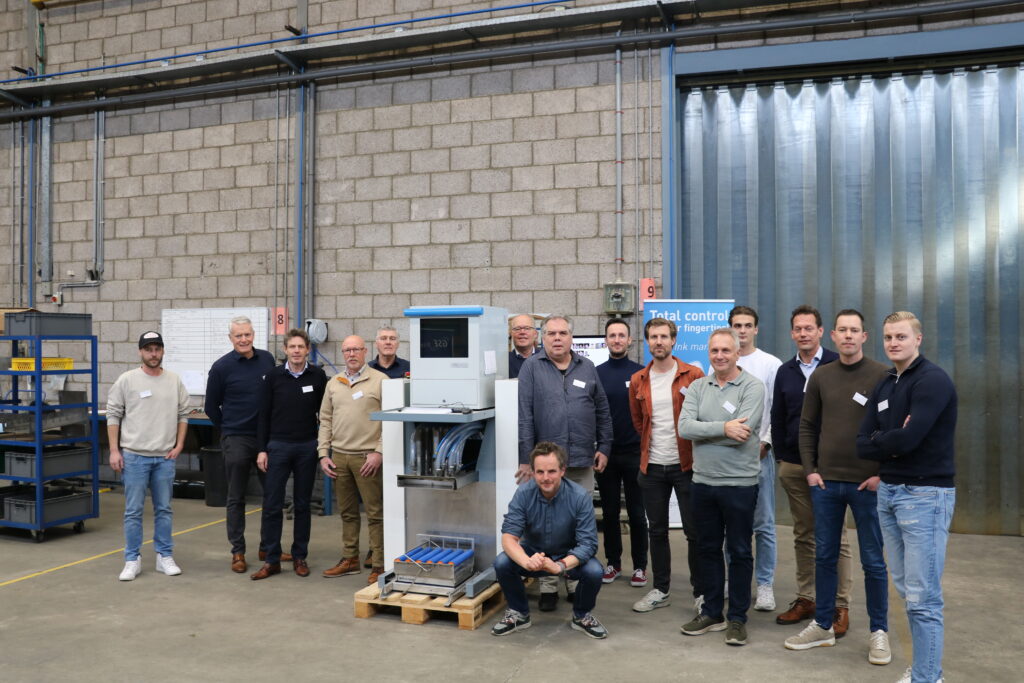
In the coming months, we will dive deeper into this topic in our InkConnection blogs, exploring how circular thinking and remanufacturing can help converters cut costs while reducing their carbon footprint.
In this first blog, we focus on component level by examining the refurbishment of our dispensing valves. We have been doing this for decades, yet – remarkably – we never really examined how refurbishing impacts the carbon footprint. So, it is about time we explored this properly.
The hidden carbon cost of new components
When customers purchase a new component such as a dispensing valve, most of the carbon impact has already occurred before it even arrives on site. Raw material extraction, cutting, welding, machining, assembly and transport all contribute to the accumulated CO₂ emissions of the product.
Extending the life reduces the impact of embodied carbon. And avoiding production is often the most effective way to reduce emissions.
Circularity by design: measuring the environmental impact of dispensing valve refurbishment
GSE’s 18/5 mm dispensing valve is designed for repeated refurbishment. It can be easily disassembled, fitted with new wear parts, and reassembled. Users of systems like the Colorsat Compact can replace defective valves with new units or choose refurbished ones.
Refurbishment options include:
- Using a refurbishment kit and performing the work in‑house (after GSE training).
- Having GSE engineers refurbish valves during a service visit.
- Most commonly: sending valves to GSE for full refurbishment and receiving them back as good as new.
Here is the step-by-step process in photos.
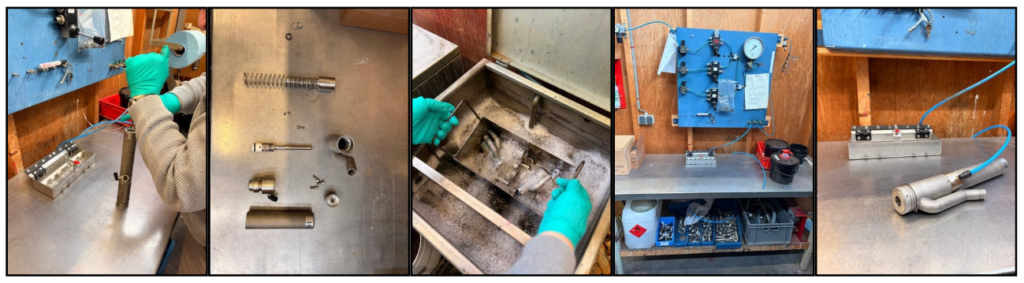
- Disassembly of the valve
- Inspection of wear parts
- Cleaning of components
- Reassembly and calibration
- Functional testing at the test station
Refurbishing makes a measurable difference
In our CO₂ emissions calculation below, we compare this most common refurbishment scenario to the environmental impact of producing and installing a brand‑new valve.
We have based our calculations on an environmental impact tool developed by Circonnect a consultancy and knowledge platform set up by the Dutch government that helps SMEs in manufacturing and construction transition to a circular economy.
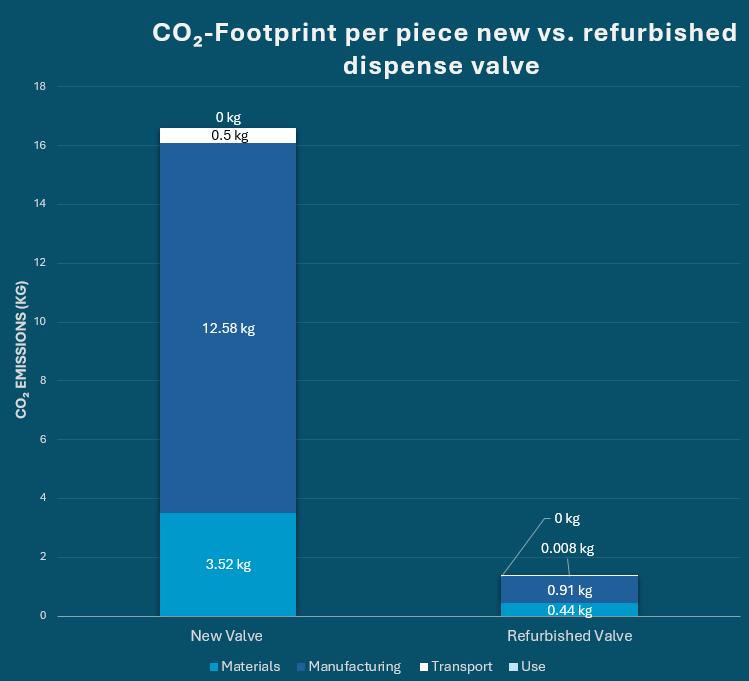
Producing a new valve carries most of the impact in materials and manufacturing, while refurbishing an existing valve adds only a minimal additional footprint.
When this impact is spread over the valve’s service life, the environmental impact of refurbishment is close to zero compared to making a new valve.
Refurbish or replace: a life cycle comparison
A dispensing valve reaches obsolescence after approximately 30 years. Under normal operating conditions, refurbishment is required every 3-4 years, resulting in an average of ten refurbishment cycles over the valve’s operational lifecycle. Refurbishment therefore extends the functional life of a valve from roughly 3 years to its full 30-year lifespan, a tenfold increase.
For customers, this translates into reduced emissions, considerable financial savings, and a more circular procurement strategy, without trade-offs in operational reliability.
From service activity to sustainability strategy
The transition to a lower-carbon printing industry will not happen through one breakthrough, but by rethinking processes and making smarter choices, component by component.
With over 30 years of refurbishment expertise and new carbon footprint calculations underway, GSE is putting remanufacturing processes at the heart of its operations, helping converters reduce total cost of ownership and achieve sustainability goals.
Most of the time, the most effective carbon reduction is not building something new, but in giving precision technology a second life.
Want to know more?
Sign up here to receive regular updates on this blog series. Also, contact our sales team for a consultation, on email info@gsedispensing.com or telephone +31 575 568 080.